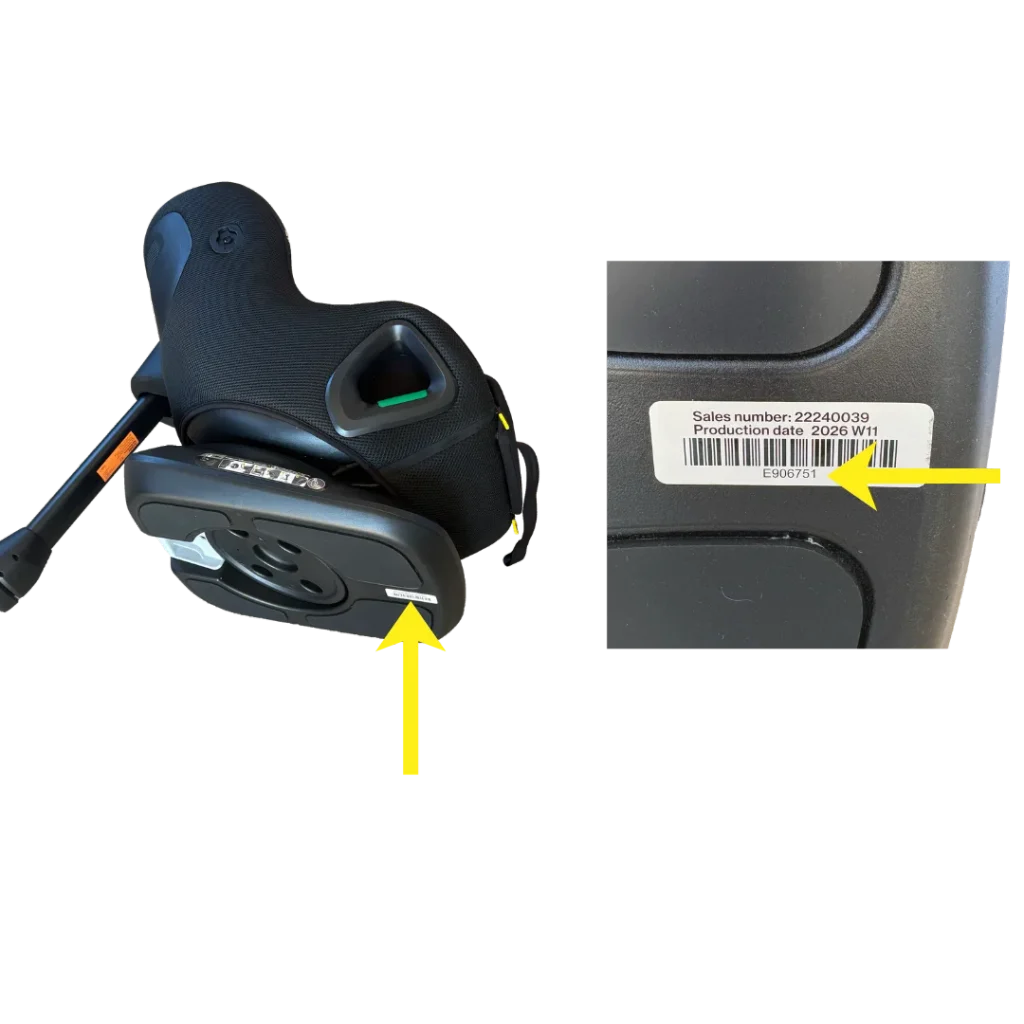
After extensive exchanges with Axkid, we can already reassure you: there is no reason for concern. The Axkid Minikid Core remains safe to use. This is a voluntary recall following an ADAC finding involving unexpected behaviour of the support leg, a behaviour never observed before. According to the test results, no danger to the child was identified (the seat had in fact already been tested without the support leg). However, the observed behaviour falls short of the standards Axkid sets for itself, and the brand chose to correct the issue rather than let it pass. Here is everything we have been able to confirm about the situation, Axkid’s testing framework, and what to do next.
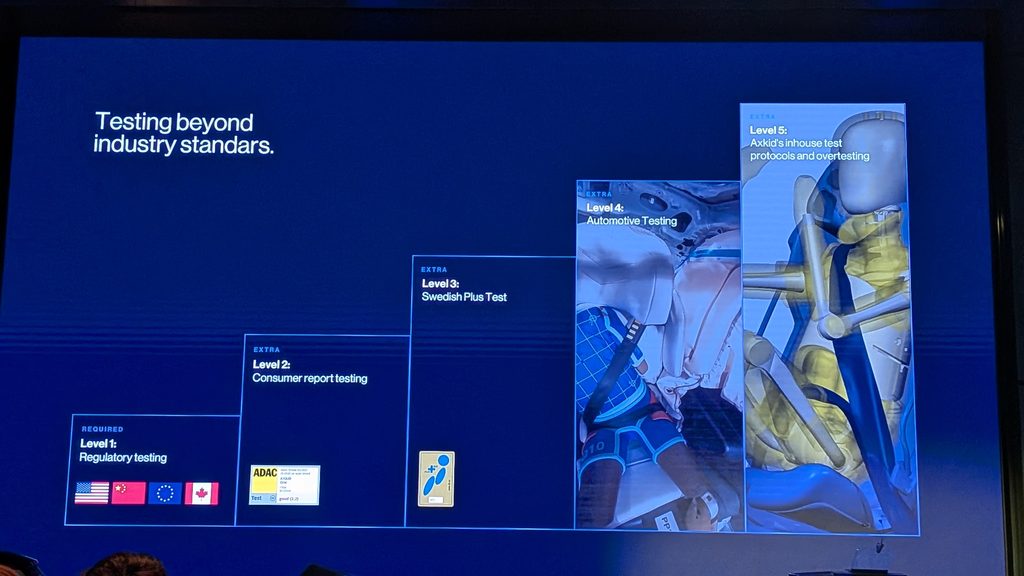
Axkid’s five levels of crash testing
For every seat it sells, Axkid works to meet five levels of requirements.
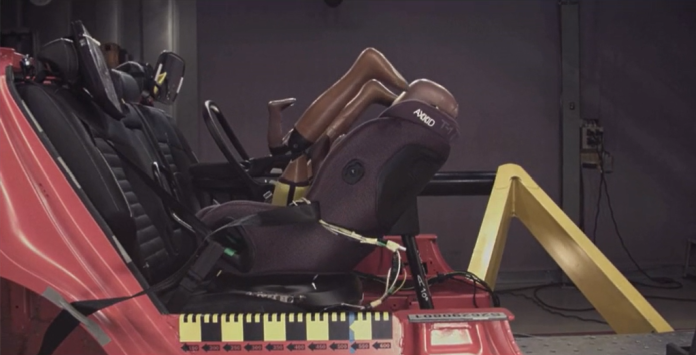
Note that the crash test footage referenced below can look alarming, particularly around the dummies’ legs. A child’s legs do not behave the same way.
Level 1, mandatory: regulatory testing (UN R129 in Europe)
This is the mandatory test for all manufacturers. Every car seat sold in Europe must meet UN Regulation No. 129. Some seats additionally qualify for the « i-Size » label under certain criteria.
Like every seat on the market, all Axkid seats meet R129 certification, but as with any regulatory floor, that alone is not enough.
Why do different tests produce different results? Crash tests can use different impact pulses, durations, speeds and configurations. This means they assess a seat’s performance under different conditions, not a single universal one.
Level 2 : independent consumer testing (ADAC/TCS in Europe)
ADAC crash tests are the most widely recognised independent collision tests for child car seats in Europe. Working with organisations such as Stiftung Warentest, TCS and ÖAMTC, they assess safety, ease of use, comfort and the presence of chemical substances, against criteria considerably stricter than the legal requirements of R129.
The protocol is highly specific: a given speed, a given angle, against a defined obstacle. It does not represent every possible situation, only one in particular. That is restrictive, but valuable: today it remains, in general, the only supplementary test able to expose the limits of regulatory testing. Manufacturers cannot choose to be selected, or not, for an ADAC test. The organisation decides independently, without informing brands in advance. These tests have already raised numerous concerns about seats judged unsafe. Despite this, such seats can remain on sale, since they are still considered « type approved. » It is left to each manufacturer to respond, or not.
This is the test on which the unexpected behaviour was observed. Axkid was able to reproduce it. Under one specific condition, the support leg retracts as though someone had pressed its release button, and the seat behaves as if the leg had not been fitted at all. The new protocol introduced in 2025 is notably stricter, with more severe consequences, but it allows new failure modes to be caught. Worth noting: ADAC still does not use belt pretensioners in its crash tests, which negatively affects the results of all belt-installed seats.
The configuration tested without the support leg is one Axkid had already tested at Level 4 to cover cases of misuse. There was no breakage and no danger to the child, only more movement of the seat than expected. Axkid considers this unacceptable against its own standards and has chosen to recall the seat and improve it. In the meantime, there is no reason to stop using it.
Level 3: the Swedish « Plus Test »
The Swedish Plus Test is a voluntary test widely regarded as the most rigorous crash test for child car seats. It sets stricter limits on impact speed and neck forces than any other test, ensuring that only the safest rear-facing seats are certified. Today, only rear-facing seats can obtain it.
All of Axkid’s extended rear-facing seats have held the Plus Test certification for many years. Under this protocol, no issue with the support leg has been observed.
Level 4 : real-world vehicle crash testing
As part of full-vehicle crash tests, some manufacturers use real cars to test their seats under real accident conditions. While sled testing is essential, real vehicle bodies add a valuable layer of data. It allows manufacturers to see how seats interact with a vehicle’s own safety systems, such as side airbags or belt pretensioners.
As shown in this footage, Axkid used one such crash test to evaluate the seat’s behaviour without the support leg deployed. The seat performs better with it, but still fulfils its role correctly without it. Worth noting: in a scenario like this, with a poorly secured seat or a loosely fitted belt, it is the front-seat passenger who faces the greatest risk. To reduce the risk of a violent impact with the front seat back, it is recommended to
- either leave a generous gap between the two seats,
- or move the front seat back until it touches, but without blocking the carseat’s movement’s
Level 5: Axkid’s internal over-testing programme
Beyond legal requirements, Axkid subjects its seats to tests that go well past the legal limits, to demonstrate performance under extreme and unpredictable conditions. For example:
- the Minikid Core has been tested with a 28 kg dummy, and without the green clip locked, among other misuse scenarios.
- The Minikid Pro and Max have been tested with a weighted vest added to the dummy, bringing its weight to 36 kg, and passed every test under the same strict criteria; they have also been tested with a Q10 dummy, representing a 10-year-old child weighing 36 kg.
- The Axkid Up booster has been tested up to 50 kg to confirm its effectiveness for larger children.
So what should you do with your Minikid Core?
Axkid is offering two options, depending on your needs.
- Option 1: upgrade to a Minikid 4 Pro in green, grey or black (fast delivery).
- Option 2: wait for the revised Minikid 4 Core (not yet available, release date not confirmed) while continuing to use your current Minikid Core.
Either way: find your car seat’s identification number, and register your seat via the form at the bottom of this page.